AI governance: five commitments, one evidence file and seven metrics
All of it mapped to the frameworks your committee already uses, so it recognizes them without effort. And a list of what we don’t claim.
What we sign on every project
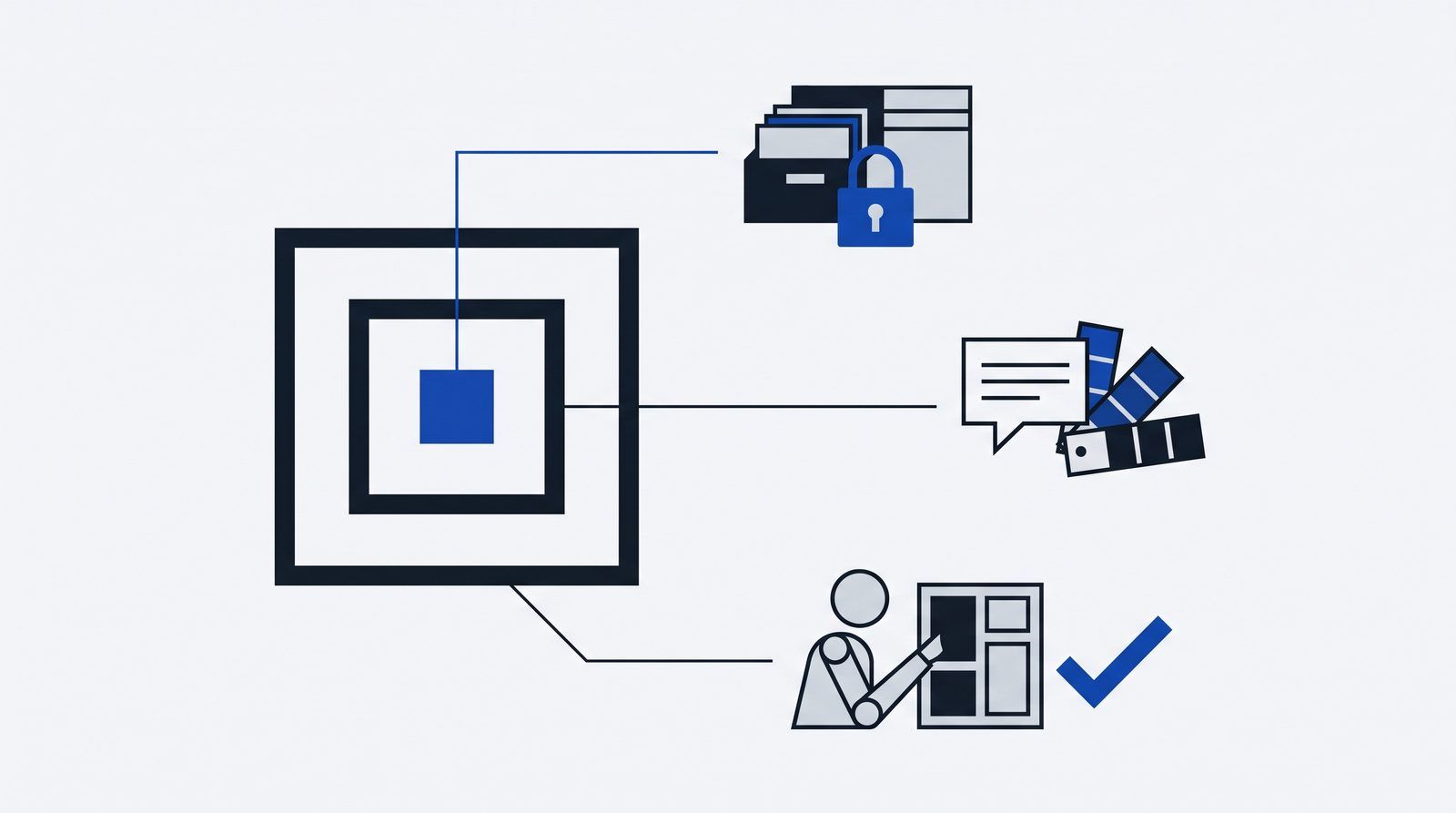
Perimeter
The model runs where the data lives.
More
Nothing leaves without being logged. Sensitive data is never used for training.
Human oversight
A person reviews before any action that affects a customer, an employee or a core system.
More
This meets, by design, the right to object to automated decisions (Mexico’s 2025 data protection law, article 27).
Evidence
Inventory, impact assessment, model card per version, complete audit log, evaluation and attack testing reports.
More
Compliance has access without intermediaries.
Independent validation
No one validates their own work.
More
The client grades the test, the client’s security team leads attack testing and the weekly review is done by a specialist other than the one who built it. A risk committee calls it effective challenge.
Clean exit
The model weights, its adapters, the tests and the audit log belong to the client and are exported at no cost.
More
Certified deletion. Advance notice of any change of base model. Optional escrow when the hardware is ours. It answers the question “what if DEBIR disappears?”.
What we don’t claim: that DEBIR complies with or is certified under ISO 42001. It is not. We deliver the documents an auditor of that standard would ask for.
Five gates. No one passes without the previous sign-off.
A risk committee calls it independent validation; ISO 42001 calls it the lifecycle.
What happens at each gate
0 and 1 · Open and report. Discovery sessions. Then a data inventory, a use case matrix, the architecture and a flow-by-flow review session with Legal. This produces the signed impact assessment, the use policy and the roadmap.
2 and 3 · Foundations and model. Hardware installed on an isolated network; data prepared and masked. The model is trained on examples approved by the company’s experts; the knowledge base is built with role-based permissions; filters and the audit log are installed. The model must pass a test with questions it never saw, graded by the client.
4 and ongoing · Pilot and operation. Agents that gather, organize and hand off. Controlled attack testing led by the security team. A pilot limited to one region or unit. Then: daily, weekly, monthly and quarterly reviews; signed versions; an exit plan tested every year.
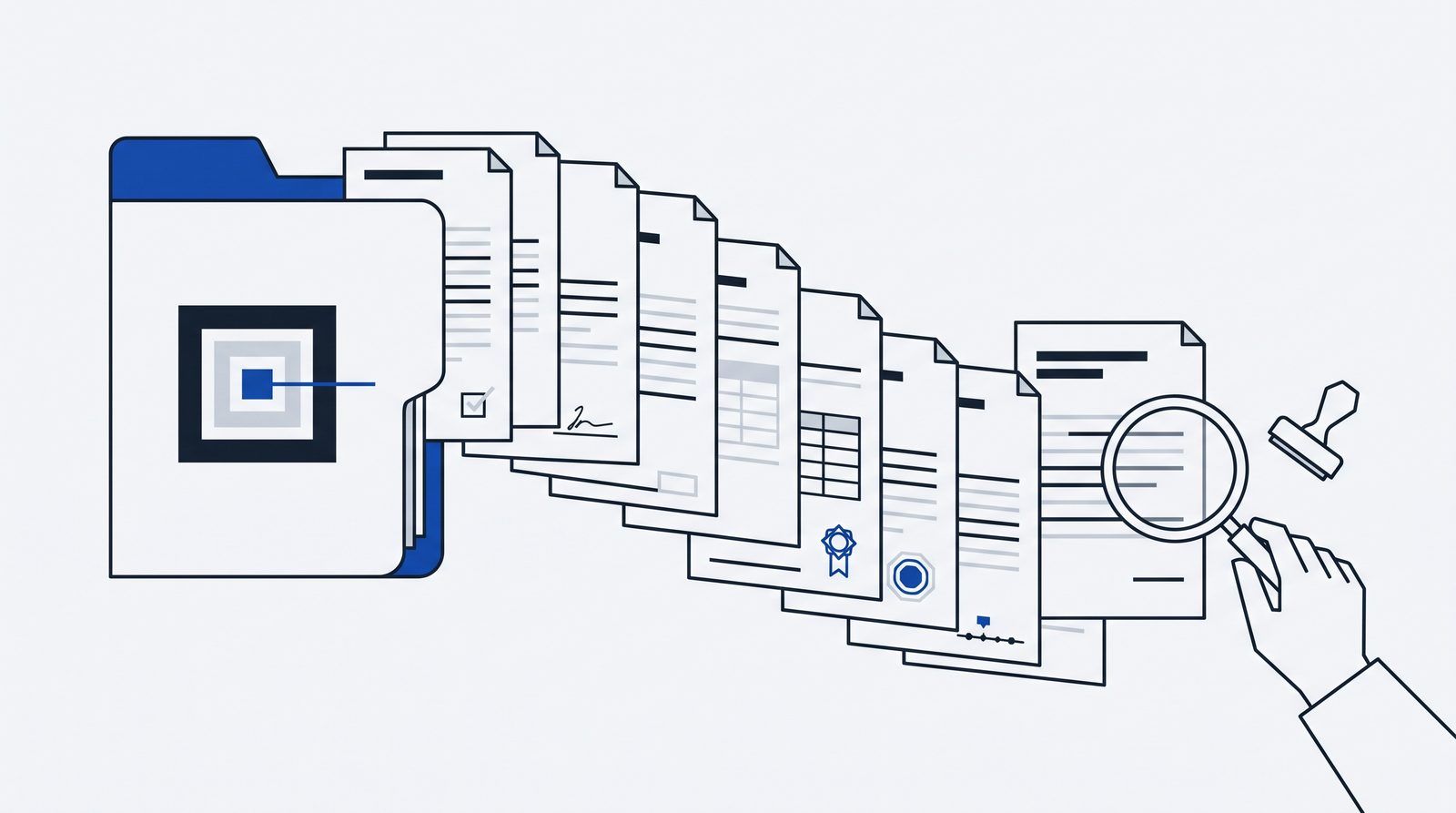
Ten documents your regulator can read without asking us
Each document is born in a phase and carries a signature.
Seven metrics we report
Test accuracy
Questions written by experts that the model never saw, by segment; the threshold is set in advance
Answers supported by sources
Share of answers backed by the documents they cite; automated grading plus a human sample
Handoff to a person
Share of conversations the agent passes to a human, why and with what resolution
Drift
Changes in the kind of questions and in answer quality against the baseline
Attack testing
Attack success rate by category, fix and retest
Audit log coverage
Share of interactions with a complete record; minimum retention of six months
Business outcomes
The metrics agreed in the Assessment, compared with the baseline
Five commitments and the frameworks that recognize them
We are not certified under any of them yet; we deliver what each one would ask for.
| Commitment | ISO 42001 | NIST AI RMF | SR 26-2 | EU AI Act | Data law |
|---|---|---|---|---|---|
| 1 Perimeter | |||||
| 2 Human oversight | |||||
| 3 Evidence | |||||
| 4 Independent validation | |||||
| 5 Clean exit |
What each framework is
ISO/IEC 42001:2023. A certifiable AI management system, with 38 controls in nine objectives. It is the language of integrators and large consultancies in Mexico.
NIST AI RMF 1.0 and the generative AI profile (2024). A voluntary US framework: govern, map, measure and manage. The reference for US parent companies.
SR 26-2 (April 2026). What the Federal Reserve, OCC and FDIC ask of banks on model risk: inventory, validation with effective challenge, monitoring and contingency plans for vendors.
EU AI Act. For high-risk uses: risk management, data governance, technical documentation, event logging and human oversight. Applicable to subsidiaries of European groups from December 2, 2027.
Mexico’s 2025 data protection law (LFPDPPP). The one that does apply in Mexico: consent, security, breach notice and the right to object to automated decisions.
What security, compliance and Legal ask
Do you run controlled attack testing (red teaming), and who leads it?
Yes, before the pilot and at every major version. Your security team leads it, not us: it is part of independent validation. The report shows the attack success rate by category, the fix applied and the retest. Findings are fixed before the pilot.
How do we know the model works before it goes to production?
With a held-out question test: your experts write questions the model never saw, the threshold is set in advance and results are reported by segment. Your team grades it, not ours. A version is released only if it matches or beats the previous one, after a week with internal administrators and the written sign-off of the process owner.
How do you manage model changes and versions?
No version reaches production without three conditions: an equal or better test result, a week with internal administrators and the written sign-off of the process owner. Every version is signed, archived and can be restored. Each one carries its model card and its row in the registry. Any change of base model is announced in advance.
What happens if the AI vendor disappears or defaults?
With the hardware on your site, you already have everything in your company: hardware, model weights, knowledge base, audit log and manuals. The exit plan sets format, deadlines, transition and certified deletion, and it is tested every year. When the hardware is ours, optional escrow of models and code with a third party is available.
Why DEBIR and not a large integrator certified under ISO 42001?
We are not certified under ISO 42001 and we don’t say we are. We deliver the documents an auditor of that standard would ask for: policy, impact assessment, registry, model cards and incident protocol, mapped to the NIST AI RMF and to SR 26-2. The difference: perimeter, identity and operation in one dedicated team, from day one to month twelve.
Discovery sessions, no commitment
With technology, compliance and two process owners. Includes an offline demonstration prepared for your sector, without using your company’s data.
Inventory and obligations
Data in four levels and a first review of what your sector requires.
Three candidate use cases
And the Assessment proposal. The Discovery is credited against the Assessment.
Founding clients program
Three seats, with an explicit discount in exchange for a publishable case and a reference.
Terms
Discovery and evidence pilot at no cost, Assessment at a discount, in exchange for a publishable case, a reference and feedback. Continuous operation is always paid at list price.